
What is a 120 Chart PDF?
A 120 chart PDF is a digitally accessible document showcasing a visual representation of numbers from one to 120, arranged in rows and columns.
These charts serve as fundamental tools for early mathematical education, aiding in number recognition and foundational arithmetic skills.
TeachersParadise and Amazon offer various options, providing convenient, educational resources for classrooms and home learning environments.
Definition and Purpose
A 120 chart PDF fundamentally represents a grid displaying numbers sequentially from 1 to 120, typically organized in ten columns and twelve rows. This arrangement isn’t arbitrary; it’s designed to visually demonstrate numerical order and relationships.
The primary purpose of a 120 chart is to support early mathematics learning. It’s a powerful tool for developing number sense – a child’s intuitive understanding of numbers and their relationships. Specifically, it aids in counting, number recognition, and understanding the concept of more and less.
Beyond basic counting, these charts are instrumental in introducing foundational arithmetic concepts. They visually support the understanding of skip counting (by 2s, 5s, and 10s), laying the groundwork for multiplication and division. Furthermore, the chart’s structure facilitates the visualization of number patterns, such as those found in addition and subtraction. Resources like those found on TeachersParadise highlight its utility as a “great visual aid” for these skills.
Essentially, a 120 chart PDF transforms abstract numerical concepts into a concrete, visual format, making learning more accessible and engaging for young learners.
Historical Development of Number Charts
The evolution of number charts, culminating in the modern 120 chart PDF, traces back to the broader history of mathematical teaching aids. While pinpointing the exact origin of the 120-specific chart is difficult, the concept of visual number representation dates back centuries.
Early forms of number lines and tables were used to assist in calculations and understanding numerical sequences. The development of standardized curricula in the 19th and 20th centuries spurred the creation of more structured tools for classroom use. These early charts often focused on smaller number ranges, gradually expanding as pedagogical approaches evolved.
The 120 chart gained prominence with the rise of constructivist learning theories, emphasizing hands-on, visual learning. Its format effectively supports the exploration of number relationships and patterns. The advent of digital technology then facilitated the creation and widespread distribution of 120 chart PDFs, making them readily accessible to educators and parents via platforms like TeachersParadise and Amazon.
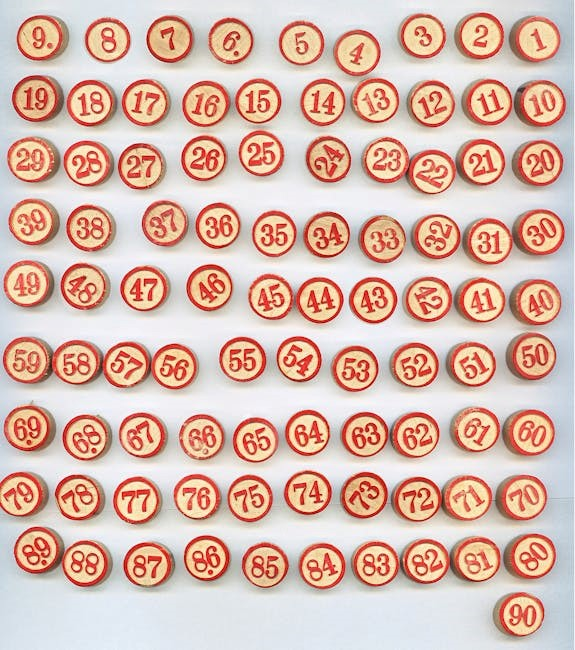
Today, the chart continues to be a staple in early education, demonstrating its enduring value as a foundational learning tool;
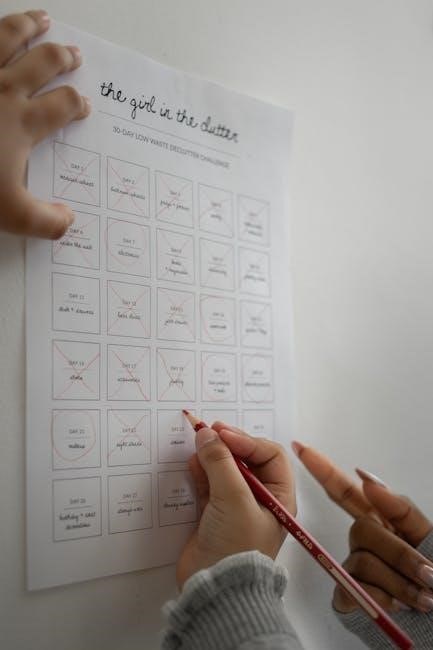
Benefits of Using a 120 Chart
120 chart PDFs offer significant educational advantages, serving as versatile tools for counting, skip counting, and pattern identification in classrooms and at home.
They visually enhance learning!
Educational Advantages for Students
120 chart PDFs provide a powerful visual foundation for students developing core mathematical concepts. The chart’s arrangement fosters a deeper understanding of number relationships, making abstract ideas more concrete and accessible.
For young learners, the chart aids in number recognition, allowing them to quickly identify and associate numerals with their corresponding quantities. It’s a fantastic tool for building counting skills, both forward and backward, and introduces the concept of numerical order in a clear, sequential manner.
Furthermore, skip counting becomes significantly easier with a 120 chart, as students can visually track patterns and identify multiples. This lays the groundwork for understanding multiplication and division. The chart also supports the development of number sense, enabling students to estimate, compare, and mentally manipulate numbers with greater confidence. Resources from TeachersParadise highlight its utility for these skills.
Ultimately, utilizing a 120 chart PDF empowers students to build a strong number foundation, setting them up for success in more advanced mathematical studies.
Classroom Management and Visual Aid
120 chart PDFs are invaluable classroom tools, streamlining instruction and enhancing student engagement. Their large format – often 17×22 inches as offered by Teacher Created Resources on Amazon – makes them easily visible to the entire class, promoting whole-group participation and focused attention.
The chart serves as a central reference point during math lessons, minimizing disruptions as students can independently locate numbers and patterns. This fosters a more self-sufficient learning environment, reducing the need for constant teacher intervention.
Beyond direct instruction, a prominently displayed 120 chart creates a visually stimulating learning space. It acts as a constant reminder of number concepts, reinforcing learning throughout the day. The charts also “decorate as they educate,” adding a colorful and purposeful element to classroom décor.
Effectively, a 120 chart PDF isn’t just a learning tool; it’s a classroom management asset, promoting order and maximizing instructional time.
Home Learning Support
120 chart PDFs provide excellent support for home learning, extending the classroom experience and fostering independent practice. Easily downloadable from sources like TeachersParadise and Amazon, parents can readily access this valuable resource to reinforce mathematical concepts learned at school.
The chart facilitates a consistent learning environment, allowing children to practice counting, skip counting, and number recognition outside of the classroom. This is particularly beneficial for homework assignments and skill reinforcement;
Parents can utilize the chart to visually demonstrate addition and subtraction, making abstract concepts more concrete and understandable for young learners. It’s a convenient tool for engaging in playful math activities, strengthening the parent-child learning bond.
Furthermore, the PDF format allows for easy printing and display, creating a dedicated learning space at home. It’s a cost-effective and accessible way to support a child’s mathematical development.

Finding and Downloading 120 Chart PDFs
Numerous online resources, including TeachersParadise and Amazon, offer 120 chart PDFs. These platforms provide both free and paid options, catering to diverse educational needs and budgets.
Reputable Online Sources (TeachersParadise, Amazon)
TeachersParadise stands out as a dedicated source for teacher-created resources, including a “Numbers 0 ⎻ 120 Chart” (TCR7663). This chart, measuring 17 x 22 inches, is specifically designed as a visual aid for counting and skip counting exercises, making it a valuable tool for educators.
Amazon, a broader marketplace, offers a wider selection of 120 charts from various brands, such as “Teacher Created Resources Numbers 1 to 120 Chart (7781)”. Amazon’s offerings include charts of similar dimensions (17 x 22 inches) and emphasize their dual purpose – educating while decorating learning spaces.
Both platforms provide convenient access to these resources, allowing educators and parents to easily download or purchase physical copies. Amazon’s selection often includes bundled chart sets or charts combined with other educational posters, while TeachersParadise focuses on specifically designed teaching tools.

When choosing a source, consider the specific needs of the learner and the desired chart format – digital download versus a physical poster.
Free vs. Paid Options
Free 120 chart PDFs are readily available through various educational websites and online searches, often offering basic charts suitable for simple counting and number recognition practice. These resources can be excellent starting points for home learning or supplementing classroom instruction, though quality and design may vary significantly.
Paid options, such as those found on TeachersParadise and Amazon, generally provide higher-quality charts with enhanced features. These may include more durable materials for physical charts, professionally designed layouts, or additional educational elements like color-coding or highlighted patterns.
The cost difference often reflects the level of detail, print quality, and accompanying resources. Paid charts frequently come from established educational brands, ensuring accuracy and pedagogical soundness.
Ultimately, the choice between free and paid options depends on individual needs and budget. For basic use, free charts suffice, but for long-term durability and enhanced learning features, a paid chart is a worthwhile investment.
File Formats and Compatibility (PDF specifics)
120 chart PDFs are overwhelmingly the standard format for distribution due to their universal compatibility and preservation of formatting across different devices and operating systems. A PDF ensures the chart will appear consistently regardless of whether it’s opened on a Windows PC, Mac, tablet, or smartphone.
PDFs are also easily printable, maintaining the chart’s dimensions and clarity. Most devices have built-in PDF viewers, eliminating the need for specialized software. However, Adobe Acrobat Reader (free to download) offers advanced features like zooming and annotation.
File sizes for 120 chart PDFs are typically small, facilitating quick downloads and minimal storage space requirements; Compatibility issues are rare, but ensuring you have an updated PDF reader is recommended.
Some charts may be compressed for faster download, potentially slightly reducing image quality, but this is usually negligible for classroom or home use. The PDF format’s portability makes it ideal for sharing with students and parents.

How to Effectively Use a 120 Chart
Utilize the 120 chart for counting exercises, skip counting practice, and identifying patterns; it visually supports addition and subtraction concepts for students.
Counting and Number Recognition
The 120 chart PDF is an exceptional resource for developing foundational counting skills in young learners. Its structured grid format allows students to visually track numbers sequentially, reinforcing the concept of numerical order from one to 120.
Beginners can practice counting by simply following the numbers in order, while more advanced students can start at different points and count forward or backward. This visual aid is particularly helpful for students who struggle with abstract number concepts, providing a concrete representation of quantity.
Furthermore, the chart facilitates number recognition by allowing students to quickly locate and identify specific numbers within the grid. Teachers can call out numbers and have students point to them on the chart, or vice versa, strengthening the connection between numeral symbols and their corresponding values. This interactive approach makes learning numbers engaging and effective, building a strong foundation for future mathematical concepts.
The chart’s layout also aids in understanding place value as students progress.
Skip Counting Practice

A 120 chart PDF proves invaluable for mastering skip counting, a crucial skill for developing multiplication fluency. The chart’s organized structure clearly demonstrates patterns when counting by twos, fives, or tens, making these concepts more accessible to young learners.
Students can visually identify multiples by highlighting or coloring numbers as they skip count, reinforcing the pattern recognition. For example, counting by fives reveals a distinct pattern of numbers ending in zero or five, easily observable on the chart.
Teachers can utilize the chart to guide students through skip counting exercises, prompting them to identify the next number in a sequence or to fill in missing numbers. This hands-on approach transforms abstract skip counting into a concrete, visual experience. The chart from TeachersParadise is “great for skip counting and more!”
This builds a strong foundation for understanding multiplication and division later on.
Identifying Number Patterns
A 120 chart PDF is exceptionally useful for visually demonstrating number patterns to students. The grid format immediately reveals predictable sequences and relationships between numbers, fostering a deeper understanding of mathematical concepts.
Students can easily observe patterns within rows and columns, noticing how numbers increase by one as you move horizontally or by ten as you move vertically. This visual representation aids in recognizing the structure of the number system and the consistent rules governing numerical order.
Furthermore, the chart facilitates the identification of odd and even numbers, as they alternate in a clear, discernible pattern. Teachers can guide students to discover these patterns independently, encouraging critical thinking and problem-solving skills.

The “convenient, useful learning tool” from TeachersParadise helps decorate as it educates, making pattern recognition engaging and accessible.
Addition and Subtraction Visualization
A 120 chart PDF transforms abstract addition and subtraction problems into concrete visual experiences for students. The chart’s grid layout allows learners to physically “move” along the numbers, representing the operations in a tangible way.
For addition, students can start at the first number and count forward the specified amount, visually tracking their progress across the chart. Conversely, subtraction involves counting backward. This method reinforces the concept of these operations as movements along the number line.
The chart’s structure makes it easy to demonstrate how adding ten results in moving down one row, while subtracting ten means moving up a row. This visual cue solidifies understanding of place value and the base-ten system.
Resources like those found on Amazon, offering “convenient, useful learning tools,” greatly enhance this visualization process, making math more accessible and less intimidating for young learners.

Variations of 120 Charts
120 chart PDFs come in diverse formats, including color-coded versions, charts highlighting specific numbers, and blank templates for student practice and customization.
These variations cater to different learning styles and educational needs.
Color-Coded Charts
Color-coded 120 chart PDFs utilize different colors to distinguish number patterns and relationships, significantly enhancing visual learning for students.
Typically, these charts employ color variations to highlight even and odd numbers, multiples of ten, or specific number families, making mathematical concepts more accessible.
For instance, multiples of five might be shaded in one color, while multiples of two appear in another, instantly revealing patterns to young learners.
This visual differentiation aids in grasping foundational arithmetic principles like skip counting and identifying prime numbers.
The strategic use of color transforms the chart from a simple number grid into a dynamic learning tool.
Teachers and parents often find these charts particularly effective for students who benefit from visual cues and kinesthetic learning approaches.
Color coding can also be customized to focus on specific learning objectives, making the chart adaptable to various educational needs.
These charts are readily available as downloadable PDFs from resources like TeachersParadise and Amazon.
Charts with Highlighted Numbers
120 chart PDFs featuring highlighted numbers offer a focused learning experience, drawing attention to specific values or sequences within the grid.
These charts commonly emphasize numbers crucial for a particular lesson, such as those used in addition or subtraction problems, or numbers representing specific dates.
Highlighting can also be used to showcase prime numbers, square numbers, or other mathematical concepts, providing a visual anchor for understanding.
The selective emphasis helps students isolate and analyze targeted numbers, improving their number sense and computational skills.
Teachers often utilize highlighted charts during guided practice, directing students’ attention to key elements of a problem or pattern.
These charts are available from online resources like TeachersParadise and Amazon, offering pre-highlighted options or templates for customization.
The ability to customize highlighting makes these charts versatile tools for differentiated instruction, catering to individual student needs.
Ultimately, highlighted charts enhance focus and accelerate learning by visually prioritizing essential numerical information.
Blank Charts for Student Use
120 chart PDFs in blank format empower students to actively participate in their learning process, fostering a deeper understanding of number relationships.
These charts provide a template for students to fill in the missing numbers, reinforcing number sequence and counting skills through hands-on practice.
Blank charts are invaluable for activities like skip counting exercises, where students can color or mark multiples of a specific number.
They also support pattern recognition tasks, encouraging students to identify and extend numerical sequences independently.
Teachers can utilize blank charts for assessment, gauging students’ grasp of number concepts and identifying areas needing further support.
Resources like TeachersParadise and Amazon offer downloadable blank chart PDFs, readily available for classroom or home use.
These charts promote independent learning and problem-solving skills, allowing students to explore mathematical concepts at their own pace.
The act of physically completing the chart solidifies understanding and builds confidence in numerical fluency.

Printing and Displaying Your 120 Chart PDF
Printing a 120 chart PDF requires considering paper size and quality for optimal visibility; lamination enhances durability for frequent classroom use and display.
Paper Size and Quality
Selecting the appropriate paper size is crucial when printing your 120 chart PDF, directly impacting its readability and usability in a learning environment. Many charts are designed to fit standard 17 x 22-inch paper, as noted by Teacher Created Resources and Amazon listings, ensuring a clear and comprehensive visual aid.
However, scaling options are available during the printing process to accommodate different paper sizes, though this may affect the font size and overall clarity. For optimal results, consider using cardstock or heavier-weight paper. This provides increased durability compared to standard printer paper, resisting tearing and wrinkling from frequent handling by students.
The paper’s finish also plays a role; a matte finish minimizes glare, making the chart easier to read under various lighting conditions. Glossy paper, while visually appealing, can create distracting reflections. Investing in higher-quality paper, even for a simple chart, contributes to a more professional and long-lasting learning tool, enhancing its value in the classroom or home.
Lamination for Durability
Protecting your printed 120 chart PDF through lamination is a highly recommended step, significantly extending its lifespan and maintaining its visual clarity. Frequent use, especially in a classroom setting, can lead to wear and tear – tears, creases, and fading are common concerns.
Lamination encases the chart in a protective plastic coating, shielding it from these damaging elements. This creates a wipeable surface, allowing for easy cleaning of accidental marks or spills, ensuring the chart remains presentable and hygienic.
Both cold and hot lamination options are available, with hot lamination generally providing a more durable and professional finish. Consider using a thicker laminate pouch for enhanced protection, particularly if the chart will be handled extensively by students. A laminated chart can withstand repeated use, making it a cost-effective investment for educators and parents seeking a long-lasting learning resource.
Classroom Display Ideas
Effectively displaying your laminated 120 chart PDF can transform it from a simple visual aid into an engaging learning centerpiece. Consider dedicating a prominent wall space, easily visible to all students during lessons and independent work.
Mounting the chart at eye level ensures accessibility for all learners. Utilize colorful borders or backing boards to make it visually appealing and integrate it with the classroom’s overall décor.
Interactive displays can further enhance learning; attach Velcro dots to numbers for skip counting activities or use dry-erase markers (on the laminated surface!) to highlight patterns. Grouping the chart with related math manipulatives, like counters or base-ten blocks, creates a dedicated math learning station. Regularly referencing the chart during lessons reinforces number concepts and encourages students to utilize it as a self-help tool. A well-placed and thoughtfully presented 120 chart fosters a positive learning environment.